
The education of girls is often described as the most powerful investment a nation can make. When a girl receives an education, she does not just learn to read and write; she gains the tools necessary to reshape her destiny and the future of her community. This ripple effect begins with the individual but quickly expands to touch every aspect of society, from economic stability to public health and social justice. By removing the barriers to the classroom, we unlock a reservoir of talent and leadership that has the potential to solve some of the world’s most pressing challenges.
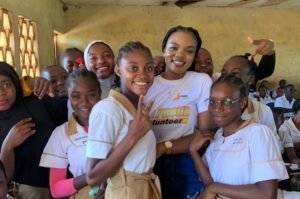
Visualizing the impact of global education helps us understand the scale of the movement. A single classroom of empowered girls represents a future generation of doctors, engineers, and policymakers who will lead their nations toward prosperity. The following image captures the essence of this transformative journey, highlighting the hope and determination found in learning environments across the globe.
Imagine a world where every girl, regardless of her birthplace or background, has the opportunity to complete twelve years of quality schooling. This is not just a moral imperative; it is a strategic necessity for global development. For decades, experts have observed that educating a girl is like planting a seed that eventually provides shade and fruit for an entire village. When you teach a boy, you educate an individual, but when you teach a girl, you educate a whole nation. This blog explores why this simple shift in focus is the key to unlocking a more equitable and prosperous world.
The journey toward universal girls’ education is fraught with challenges, yet the rewards are unparalleled. Education serves as a protective shield, reducing the likelihood of child marriage and early pregnancy while increasing the chances of economic independence. As girls transition into adulthood with the knowledge and confidence gained in the classroom, they become active participants in their local economies and vocal advocates for change. This transformation is the catalyst that ignites a ripple effect, uplifting families and nations alike through a cycle of empowerment and progress.
Despite significant progress over the last two decades, millions of girls around the world remain out of school. Barriers such as poverty, conflict, and deeply ingrained social norms continue to prevent young women from accessing their right to learn. In many regions, the cost of school fees, uniforms, and supplies makes education an unreachable luxury for families struggling to survive. Furthermore, the lack of safe transportation and proper sanitation facilities in schools often discourages parents from sending their daughters to class, particularly as they reach adolescence.
Historically, educational systems were often designed with a bias toward male students, reflecting societal views that prioritized a woman’s role in the domestic sphere. These systemic hurdles created a gap that has persisted for generations, leaving millions of women without basic literacy skills. In addition to economic constraints, cultural practices like early marriage often force girls to drop out of school before they can reach their full potential, perpetuating a cycle of dependency and limited opportunity.
Today, approximately 129 million girls are out of school worldwide, including 32 million of primary school age and 97 million of secondary school age. While international organizations have made strides in increasing enrollment rates, the quality of education and the retention of students remain critical concerns. Addressing these issues requires a multi-faceted approach that involves government policy changes, community engagement, and direct financial support for the most vulnerable families to ensure that no girl is left behind.
Investing in girls’ education is widely recognized as the highest-return investment available in the developing world. The fundamental reasons for this are rooted in the massive socio-economic shifts that occur when women are literate and technically skilled. Education provides girls with the cognitive skills needed to navigate complex environments, the social networks to find employment, and the legal knowledge to defend their rights. It is the foundation upon which all other development goals are built, including poverty eradication and environmental sustainability.
The multiplier effect is perhaps the most compelling argument for prioritizing girls’ schooling. An educated woman is more likely to reinvest her earnings into her family, spending up to 90% of her income on health and education for her children. This creates a virtuous cycle where the benefits of one girl’s education are passed down through subsequent generations. Literacy also empowers women to participate in community decision-making, ensuring that their perspectives are heard in matters of local governance and resource management.
Beyond the individual family unit, educating girls drives national progress by diversifying the workforce and fostering innovation. When women are included in the formal economy, productivity increases, and industries benefit from new perspectives and leadership styles. Socially, education fosters a culture of equality and respect, challenging traditional gender roles and reducing the prevalence of gender-based violence. This holistic progress is essential for creating stable, resilient societies capable of thriving in the 21st century.
Education is a primary driver of economic mobility. For every year of secondary school a girl completes, her future earning potential increases significantly, often by as much as 20%. This increase in income allows women to lift themselves and their families out of extreme poverty. When girls are educated, they are more likely to enter the formal workforce, contribute to the tax base, and participate in the global marketplace, which in turn stimulates national economic growth and stability.
By providing girls with vocational training and higher education, we prepare them for high-growth sectors such as technology, medicine, and engineering. This empowerment allows them to break the cycle of low-wage manual labor that often characterizes poverty-stricken regions. As women move into professional roles, they bring stability to their households and serve as role models for younger girls, demonstrating that financial independence is an achievable goal through dedication and learning.
Poverty reduction is most effective when it addresses the root causes of inequality. Educated girls are less likely to experience the “poverty trap,” as they possess the literacy and numeracy skills required to manage finances and start small businesses. By increasing their earning power, they ensure that their own children will have access to better nutrition and schooling, effectively stopping the intergenerational transfer of poverty and creating a legacy of prosperity.
The link between a mother’s education and the health of her children is undeniable. Educated women are more informed about nutrition, hygiene, and the importance of vaccinations. Statistics show that children of educated mothers are twice as likely to survive past the age of five compared to children of uneducated mothers. Furthermore, educated women are better equipped to seek medical assistance during pregnancy and childbirth, leading to a significant reduction in maternal mortality rates globally.
Mothers with a basic education are more likely to understand the benefits of a balanced diet and clean water, which directly impacts the physical and cognitive development of their children. They are also more proactive in seeking preventative care, such as regular check-ups and immunizations. This focus on health ensures that the next generation is stronger, more resilient, and better prepared to succeed in school and life, reducing the overall burden on national healthcare systems.
Education provides women with the knowledge and agency to make informed decisions about family planning. Women with secondary education tend to have smaller, healthier families, which allows for a more equitable distribution of resources within the household. This demographic shift is crucial for sustainable development, as it helps balance population growth with available resources while ensuring that every child receives the attention and support they need to thrive.
Breaking social barriers is a critical component of girls’ education. In the classroom, girls develop the confidence to speak up, challenge injustice, and envision themselves in leadership roles. This internal transformation is reflected in their external environment as they begin to take on active roles in community organizing and local politics. Education dismantles the myth that leadership is a male-only domain, paving the way for a more inclusive and democratic society.
Education builds the foundational confidence girls need to lead. By mastering new subjects, they learn that their voices and ideas hold significant value. | Independent leaders emerge when girls are given the space to learn. They gain the critical thinking skills required to solve community-level problems effectively. |
When girls are encouraged to lead from a young age, they grow into women who are unafraid to tackle societal challenges. Schooling provides them with the public speaking and negotiation skills necessary to advocate for their communities. Whether they are leading a local non-profit or serving in a national parliament, educated women bring a unique perspective to leadership that often prioritizes social welfare and long-term community health.
Gender parity in schools is the first step toward gender parity in all sectors of society. By ensuring that girls have the same educational opportunities as boys, we create a level playing field where merit and hard work determine success. This shift in social dynamics helps to eliminate discriminatory laws and practices, fostering a culture where every individual is valued for their contribution rather than their gender.
Across the globe, numerous success stories highlight the transformative power of literacy. In rural parts of East Africa, community-led initiatives that provide scholarships and mentoring for girls have seen a dramatic rise in the number of female entrepreneurs and healthcare workers. These programs demonstrate that when the financial burden is removed and social support is provided, girls excel and give back to their communities at an extraordinary rate. These real-world examples serve as a blueprint for global initiatives aimed at closing the gender gap in education.
Another profound example can be found in South Asia, where female-led literacy circles have empowered women to fight for better working conditions and land rights. These women, once marginalized, now use their education to navigate legal systems and secure a better future for their families. Their stories prove that education is not just about textbooks; it is about providing the marginalized with a voice and the agency to demand change. These insights reinforce the idea that investing in girls is a guaranteed path to broader social reform.
Global activists and educators have long championed the cause of gender parity in schools, emphasizing that the world cannot thrive while half its population is held back. Their insights provide a roadmap for policy and advocacy.
“Education is the most powerful weapon which you can use to change the world. When we prioritize girls’ education, we are not just helping one person; we are investing in the future of humanity itself. Gender equality in the classroom is the precursor to peace and prosperity on a global scale.”
Prominent figures like Malala Yousafzai and Graça Machel have consistently highlighted that the lack of education for girls is a global crisis that requires an urgent and coordinated response. They argue that the barriers preventing girls from learning are often artificial and can be dismantled through political will and community action. By listening to these experts, we understand that the movement for girls’ education is a movement for basic human rights and dignity.
There are several misconceptions regarding the education of girls, particularly in developing regions. These myths often serve as justifications for maintaining the status quo and must be debunked to move forward. Understanding the reality behind these misconceptions is essential for advocates and policymakers who are working to increase school enrollment and retention rates for girls.
Common Myth | The Reality |
|---|---|
Educating girls is too expensive for poor nations. | The economic cost of NOT educating girls is far higher due to lost productivity. |
Education makes girls abandon their cultural traditions. | Education empowers girls to preserve culture while eliminating harmful practices. |
Only primary education is necessary for girls. | Secondary and tertiary education provide the greatest economic and health benefits. |
One of the most persistent myths is that developing countries cannot afford to prioritize girls’ education over more “immediate” needs like infrastructure. In reality, the World Bank has shown that failing to educate girls to the same level as boys costs countries between $15 trillion and $30 trillion in lost lifetime productivity and earnings. Education is not a drain on resources; it is the most efficient way to generate them.
Another common mistake is the belief that education is a Western imposition that erodes local culture. On the contrary, educated women are often the best custodians of their cultural heritage. They use their literacy to document traditions and teach the next generation, all while having the critical thinking skills to challenge outdated and harmful practices like child marriage. Education modernizes the society without stripping it of its unique identity.
In summary, educating girls is a transformative force that benefits everyone. By breaking down the barriers to the classroom, we empower individuals to become independent, healthy, and economically stable. The ripple effect of this empowerment extends to their families, their communities, and eventually, their entire nations. The evidence is clear: when girls are educated, poverty rates drop, health outcomes improve, and societies become more stable and just.
Economic Growth: Secondary education significantly boosts a woman’s lifetime earnings and national GDP.
Health Improvements: Educated mothers have healthier children and lower maternal mortality rates.
Social Leadership: Education provides the confidence and skills needed for girls to become community leaders.
Sustainable Development: Gender parity in schools is essential for achieving long-term global goals.
The time to act is now. You can be a part of this global transformation by supporting organizations that work on the front lines of girls’ education. Whether through a monthly donation, volunteering your time as a mentor, or simply advocating for policy changes in your own community, every action counts. Together, we can ensure that every girl has the chance to learn, lead, and succeed.
Thank you for taking the time to learn about why educating girls changes everything. Your interest and support are vital to the movement to educate every girl, everywhere. By staying informed and engaged, you are helping to create a world where every young woman can reach her full potential and contribute to a brighter, more equitable future for all of us.